
Brick Repair in Richmond, VA for Older Brick Homes
A brick wall can stand for well over a century, but only if the small problems get fixed before they turn into big ones. A cracked brick under a window, a corner where the face has flaked away, or a soft spot below a leaky gutter are all places where water gets in. Heritage Masonry & Brick is a family of traditional masonry contractors with more than 25 years of experience, and brick repair on Richmond homes is the core of what we do. Our family roots go back to Scotland, where building in stone and brick with lime mortar has centuries of tradition. That includes brick color matching and mortar color matching, so a repair looks like part of the original wall, plus repointing and tuckpointing around it where the joints are worn.
We're a family of traditional masonry contractors, and brick is all we know. We grew up on the job, so when we repair an old wall we do it the old way: matched brick, lime mortar and joints tooled to match. Over 25 years of experience, working 7 days a week.
Why brick fails on older Richmond houses
Most of the rowhouses and townhomes in the Fan, the Museum District, Church Hill and Jackson Ward were built with brick fired at lower temperatures than modern brick. That older brick is softer and more porous. It works well as long as water can move in and out of the wall freely, but it doesn't take kindly to being sealed up or patched with the wrong materials.
Spalling
Spalling is when the face of a brick pops off, leaving a rough, crumbly surface behind. It usually comes from water soaking into the brick and then freezing and thawing through a Richmond winter. It can also be caused by hard cement mortar or a non-breathable sealer that traps moisture inside the brick. Once the hard outer face is gone, the soft core underneath wears away much faster.
Cracked and loose brick
Cracks can run through the bricks themselves or follow the mortar joints. A single cracked brick is often just wear. A line of cracked bricks, or a crack that keeps getting wider, can point to movement in the wall. If we think the cause is structural, we'll say so and look at it as a structural repair rather than just swapping bricks.
Efflorescence and water staining
White, powdery deposits on brick are called efflorescence. They're salts carried to the surface by water moving through the wall. Efflorescence itself does little harm, but it tells you water is getting in somewhere, often from a gutter, a downspout, a missing cap on a wall, or failed mortar joints.
How we repair brick
Finding the cause first
Before we replace a single brick, we look for the reason it failed. There's little point replacing spalled bricks under a gutter that still overflows every storm. We'll point out drainage, grading or roof problems we notice, even when they aren't masonry work.
Brick color matching
Replacement brick has to match the original in size, color, texture and hardness. Older Richmond brick is often a slightly different size from modern brick, and it has color variation that new brick doesn't. Where we can, we use salvaged or reclaimed brick, or turn a damaged brick around if the back face is sound. On homes where the brick is visible from the street, a good match matters as much as a sound repair.
Mortar color matching
The mortar around a repair has to match the rest of the wall in color, texture and joint profile, and it has to suit the brick. On older soft brick, that usually means a lime-based mortar that is softer than the brick. A hard Portland cement mortar can look fine on day one, but over the years it forces moisture and stress into the brick and causes the very spalling you were trying to fix. If the surrounding joints are worn, we may recommend repointing the whole area so the repair doesn't stand out.
Why We Repair Old Richmond Brick With Lime Mortar
The brick in most Richmond homes built before about 1940 was fired softer than modern brick, and it was laid in lime mortar. The two were made to work together. Lime mortar is softer and more breathable than the brick, so rain that soaks into the wall dries back out through the joints, and the joints take the wear instead of the brick. That's what masons mean by a sacrificial joint: it's cheap to repoint and the brick is not cheap to replace.
Patch that wall with hard Portland cement and it all turns around. The cement is now the hardest, tightest part of the wall. Water dries out through the brick instead, and the face of the brick cracks and spalls around the patch. We see it on Richmond houses every week.
When we replace a brick, we bed and point it in a lime mortar matched to the original in color, sand and hardness. Then we let it cure slowly and properly.
Brick repairs we handle
- Replacing cracked, spalled or missing bricks
- Rebuilding loose brick at corners, parapets and garden walls
- Repairing brick around windows, doors and rusted steel lintels
- Brick porch columns, piers and foundation walls
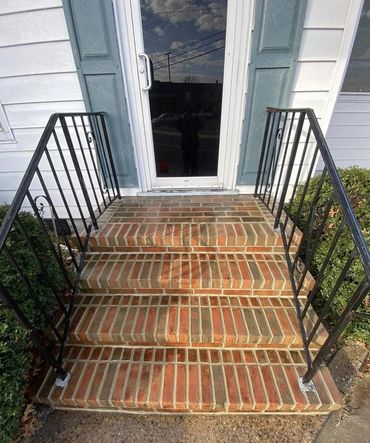
- Repairs around iron railings set into brick steps and walls
- Fixing damage left by earlier repairs done with hard cement mortar
- Brick chimneys, steps and walkways (see our chimney repairs and brick steps pages)
2026 Quality Business Award
Winner of the 2026 Quality Business Award for The Best Masonry in Richmond, Virginia. The award certificate recognizes an overall quality rating of 95% or higher. Heritage Masonry & Brick is also listed on the Virginia Department of Historic Resources (DHR) Historic Trades List, the state's directory of tradespeople who work on historic buildings.

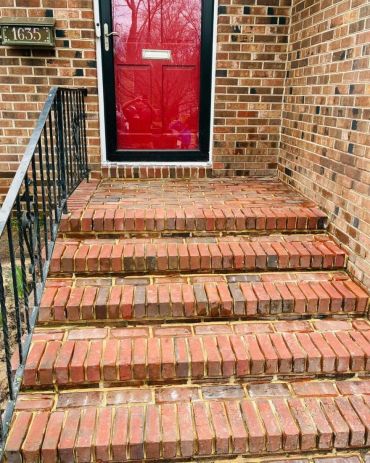
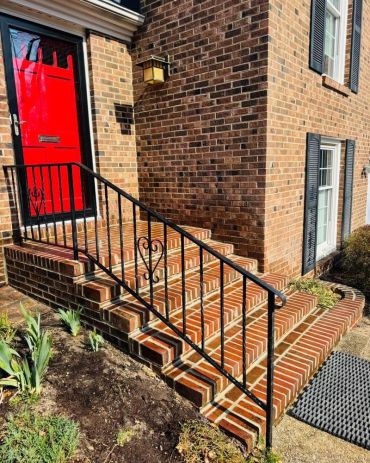
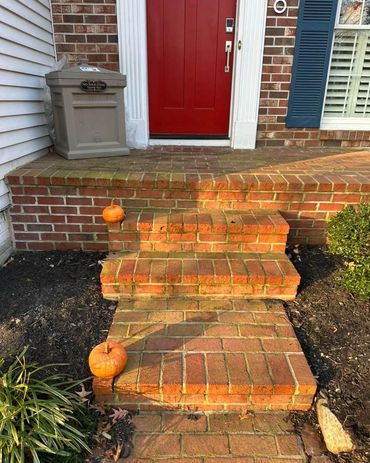
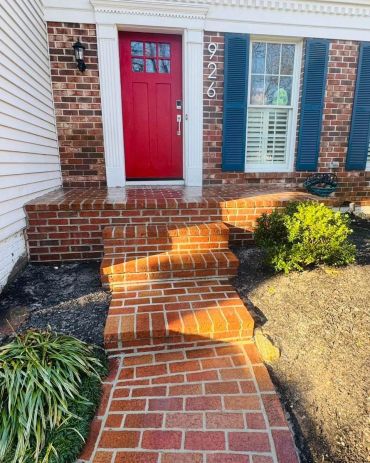
Brick Repair Richmond, VA
Need Brick Repair in Richmond?
One cracked brick or a whole wall, we'll fix it the old way, with matched brick and lime mortar, so it looks like it was always there. Call Thomas and the family at (804) 324-6304. We pick up 7 days a week.
